GameStop's eBay Bid: Ryan Cohen's Unconventional Approach Explained
In a surprising move, GameStop made an unsolicited offer to acquire eBay for nearly $56 billion. The announcement sparked a bizarre CNBC interview with CEO Ryan Cohen, described as evasive and awkward. Shortly after, Cohen took to eBay himself, listing personal items with signed proposal letters. This Q&A breaks down the key details.
What exactly did GameStop propose to eBay?
GameStop announced on Sunday it had made an unsolicited offer to acquire eBay. The deal would be financed with half cash and half stock, as stated in the public proposal on GameStop's website. However, the numbers don't add up easily. eBay's market cap is about $46 billion, while GameStop's is only $11 billion. GameStop has around $9 billion in cash reserves, and it received a $20 billion financing confidence letter from TD Securities. That still leaves a gap of roughly $16 billion. Cohen has not explained how they will close this gap, simply pointing to the website for details. The offer is subject to eBay's board review, and eBay has acknowledged receipt.
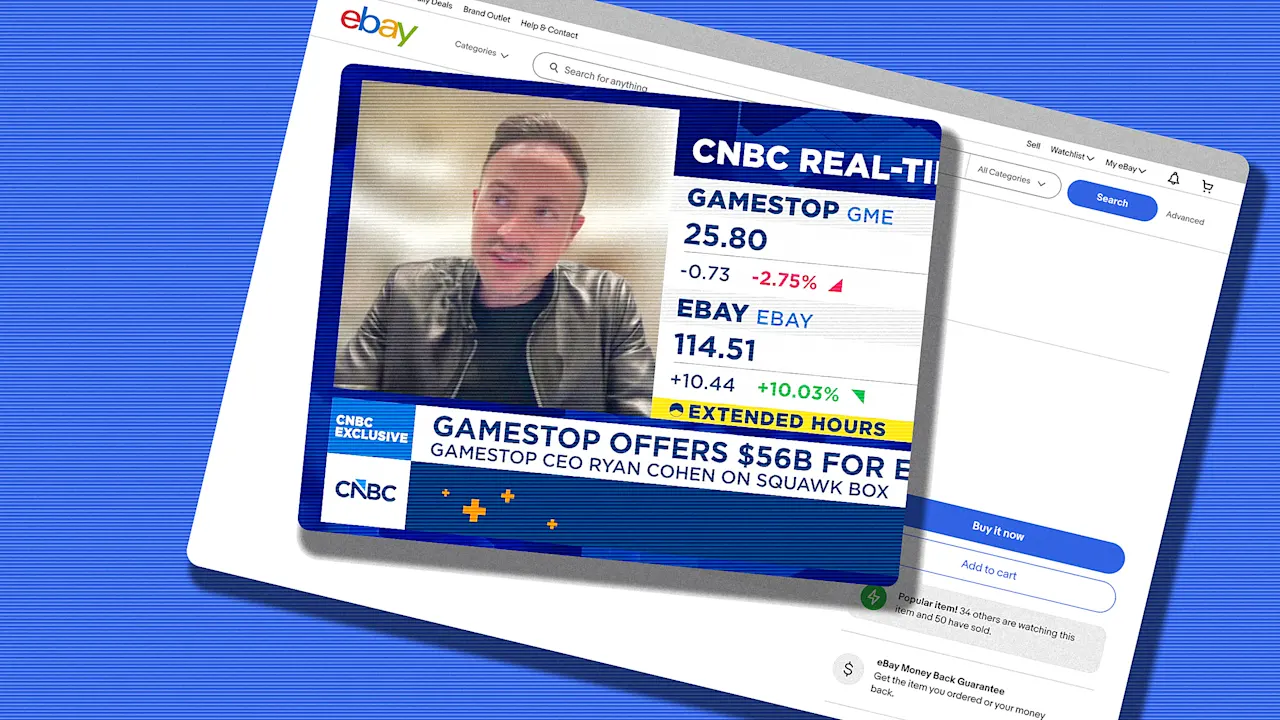
Why was the CNBC interview with Ryan Cohen considered bizarre?
Media outlets called the CNBC interview "bizarre," "awkward," "evasive," and "dizzying". When asked how GameStop would afford the $56 billion move, Cohen repeatedly deflected, saying, "It's on our website." CNBC coanchor Becky Quick pressed him, asking where the rest of the money would come from, given the shortfall. Cohen responded, "We'll see what happens" and then claimed he didn't understand the question. He insisted the full details were online. The interview felt more like a comedy skit than a serious business discussion, leaving viewers with more questions than answers.
How did Cohen address the financing gap in the interview?
When CNBC pointed out the obvious math problem—that GameStop's cash reserves plus the TD Securities letter still left a $16 billion hole—Cohen gave vague answers. He said, "We have the ability to issue stock in order to get the deal done" and again referred to the website. But issuing stock would dilute existing shareholders, and it's unclear if the market would support such a move. Cohen offered no concrete plan for bridging the gap. His evasiveness frustrated the interviewers and left analysts skeptical about the bid's feasibility. The lack of transparency was a major reason the interview was widely panned.
What did Cohen’s personal eBay listings reveal?
After the interview, Cohen posted on X that he was "selling stuff on eBay to pay for eBay". He listed several personal collectibles, including
- Baseball trading cards
- A first-generation Apple iPhone priced at $9,000
- Other collectible items
What rationale did Cohen provide for acquiring eBay?
In the interview, Cohen argued that eBay has "the second largest e-commerce franchise" and that there's a big opportunity to "pull costs out of the system and accelerate revenue growth". He pointed to GameStop's own turnaround as an example. Despite GameStop's struggles and near-bankruptcy, it's now "making a few bucks." Cohen believes eBay could be "in a much stronger position" and become a much larger business. He specifically mentioned that focusing on collectibles could be a huge growth driver. The offer letter to eBay's board also emphasized these synergies. However, critics note that GameStop's operational success is still unproven on a large scale.
How has eBay responded to GameStop’s offer?
eBay posted a press release confirming receipt of GameStop's unsolicited offer. The company stated that its board of directors will "carefully and thoroughly" consider the proposal. Beyond that, eBay declined to comment further. Notably, GameStop has already built a 5% stake in eBay, suggesting a longer-term interest. The board's response is pending, and market observers are watching closely. Given the financing questions and the unconventional behavior of Cohen, the likelihood of a smooth acquisition is uncertain. eBay's shareholders may be skeptical, but the board has a fiduciary duty to evaluate any serious offer.
What does Cohen’s personal eBay activity signify?
Cohen's decision to list personal items on eBay—complete with signed proposal letters—was a clear publicity stunt. It served to mock the financing concerns while also drawing attention to his vision for eBay's collectibles business. By personally engaging in the platform, he underscored his belief in eBay's potential. However, it also risked trivializing a serious multibillion-dollar bid. Some saw it as a savvy move to keep the story in the news; others viewed it as unprofessional. Regardless, the stunt highlighted Cohen's unconventional style as an activist investor and CEO. It remains to be seen whether this approach will help or hinder the acquisition attempt.