How Spotify's Wrapped Engine Crafts Your Year in Music: A Step-by-Step Technical Guide
Introduction
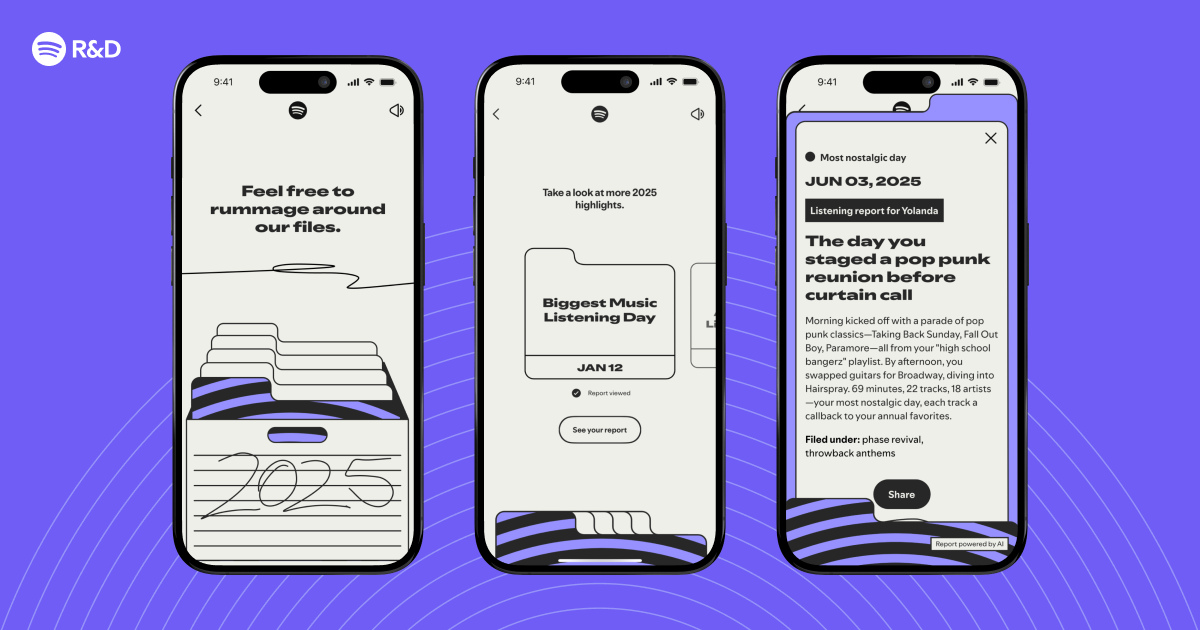
Imagine having the power to distill an entire year of personal music listening into a compelling, shareable story. That's exactly what Spotify's Wrapped feature does every December, and in 2025, the technology behind it reached new heights. This guide walks you through the technical pipeline that transforms raw streaming data into personalized highlights—from identifying those 'aha' listening moments to weaving them into a narrative. Whether you're a data engineer or a curious music fan, you'll discover the step-by-step process behind the magic.
What You Need
- Data sources: User listening history (timestamps, track IDs, skip/play events), audio features (tempo, energy, danceability), metadata (genre, artist popularity, release year).
- Compute resources: Distributed processing cluster (e.g., Apache Spark) and a GPU-accelerated machine learning environment.
- Machine learning models: Clustering algorithms (k-means, DBSCAN), sequence models (LSTM for temporal patterns), and text-generation models (e.g., GPT fine-tuned on Spotify's editorial voice).
- Narrative templates: Pre-written story skeletons with slots for personalized facts (e.g., "Your top genre was genre, led by artist").
- Quality assurance tools: A/B testing framework and human review dashboards.
Step-by-Step Process
Step 1: Ingest and Clean Raw Listening Data
Collect every stream event from the past year: track ID, timestamp, device, skip/complete status. Remove duplicates, correct timezone offsets, and filter out sessions shorter than 30 seconds (likely accidental plays). Store in a columnar format like Parquet for efficient querying.
Step 2: Augment with Rich Metadata
Join each stream with track-level metadata: artist, album, genre tags, release date, and acoustic features from Spotify's API. This layer enables deeper analysis—for example, spotting that you listened to 'Bohemian Rhapsody' 50 times because its dynamic shifts appear in your most replayed moments.
Step 3: Extract Temporal Signatures
Apply time-series feature engineering to capture listening 'rhythms': hourly/daily/weekly patterns, seasonal trends (e.g., more Chopin in autumn), and intensity changes. Identify periods of high engagement (e.g., during commutes or late-night study sessions). These become anchors for story points like 'Your go-to morning playlist.'
Step 4: Detect Milestone Events
Use sequence models to pinpoint first-listens of new tracks, repeated plays that exceed three standard deviations from a user's mean, and sudden genre switches (e.g., from EDM to classical). Flag these as 'interesting moments'—the raw material for narrative hooks.
Step 5: Rank Moments by Emotional Impact
Score each candidate moment using a composite metric: recency, frequency, audio feature similarity, and contextual relevance (e.g., listening during a global event). Train a regression model on historical Wrapped feedback (click-through rates, shares) to weigh these factors. Keep the top 20 moments per user.
Step 6: Cluster Moments into Storylines
Apply hierarchical clustering to group related moments—e.g., all 'first listen' events for indie rock tracks form one cluster, repeated holiday classics form another. Each cluster becomes a potential 'chapter' in the user's year story. Use silhouette scores to validate cohesion.

Step 7: Generate Personalized Narratives
For each cluster, select a narrative template that matches the pattern (e.g., 'You discovered artist when...' for a first-listens cluster). Fill dynamic slots with exact track/artist names and durations. Use a fine-tuned language model to rewrite templates in a natural, varied tone—avoiding repetition across users.
Step 8: Assemble the Wrapped Highlight Reel
Order the chapters chronologically (or by a drama curve: start strong, build tension, end with a surprise). Inject multimedia: dynamic album art, animated audio spectrograms, and short audio clips from top tracks. Apply responsive design rules so the story renders beautifully on mobile, tablet, and desktop.
Step 9: Test and Iterate with A/B Testing
Before public release, run A/B experiments on a sample of users. Compare engagement metrics (completion rate, share rate) between the algorithmic version and a baseline random selection of moments. Optimize the model weights and narrative phrasing based on results.
Step 10: Deploy and Monitor
Deploy the pipeline to production, scaling horizontally to handle millions of users in parallel. Monitor for drift (e.g., sudden changes in listening behavior) and set up alerts if story generation fails for more than 1% of users. Continuously feed user interaction data back into the model retraining cycle.
Tips for Success
- Embrace diversity: Avoid highlighting only the most frequently played artist—include niche discoveries, seasonal shifts, and even guilty pleasures to reflect the full listening spectrum.
- Watch for outliers: A user who played 'Baby Shark' 200 times for a child shouldn't have that as their top moment. Apply a 'weirdness' filter that down-weights anomalies lacking context.
- Respect privacy: Never expose raw timestamps or exact locations. Use time windows (e.g., 'late nights in June') and aggregate data.
- Keep it fresh: Update narrative templates annually to avoid the same stories from previous years. Consider seasonal trends or cultural events.
- Test with real humans: Run internal beta tests where employees review their own Wrapped and flag any inaccuracies or 'creepy' moments.
By following these steps, you can create a system that turns a year's worth of digital noise into a symphony of personal memories—just like Spotify's 2025 Wrapped does.