SPIFFE: The Identity Backbone for Autonomous AI and Non-Human Entities
In an era where artificial intelligence systems are becoming increasingly autonomous and agentic, the traditional identity frameworks designed for human users and static credentials are no longer sufficient. Enter SPIFFE (Secure Production Identity Framework For Everyone), an open standard that provides a robust, cryptographically verifiable identity solution for workloads, including non-human actors like AI agents, bots, and robotic systems. Originally built for microservices in cloud-native environments, SPIFFE has evolved into a battle-tested framework that addresses the unique challenges of securing agentic AI. Below, we explore key questions about how SPIFFE works and why it is a perfect fit for modern, dynamic, and distributed systems.
What Exactly Is SPIFFE and How Does It Work?
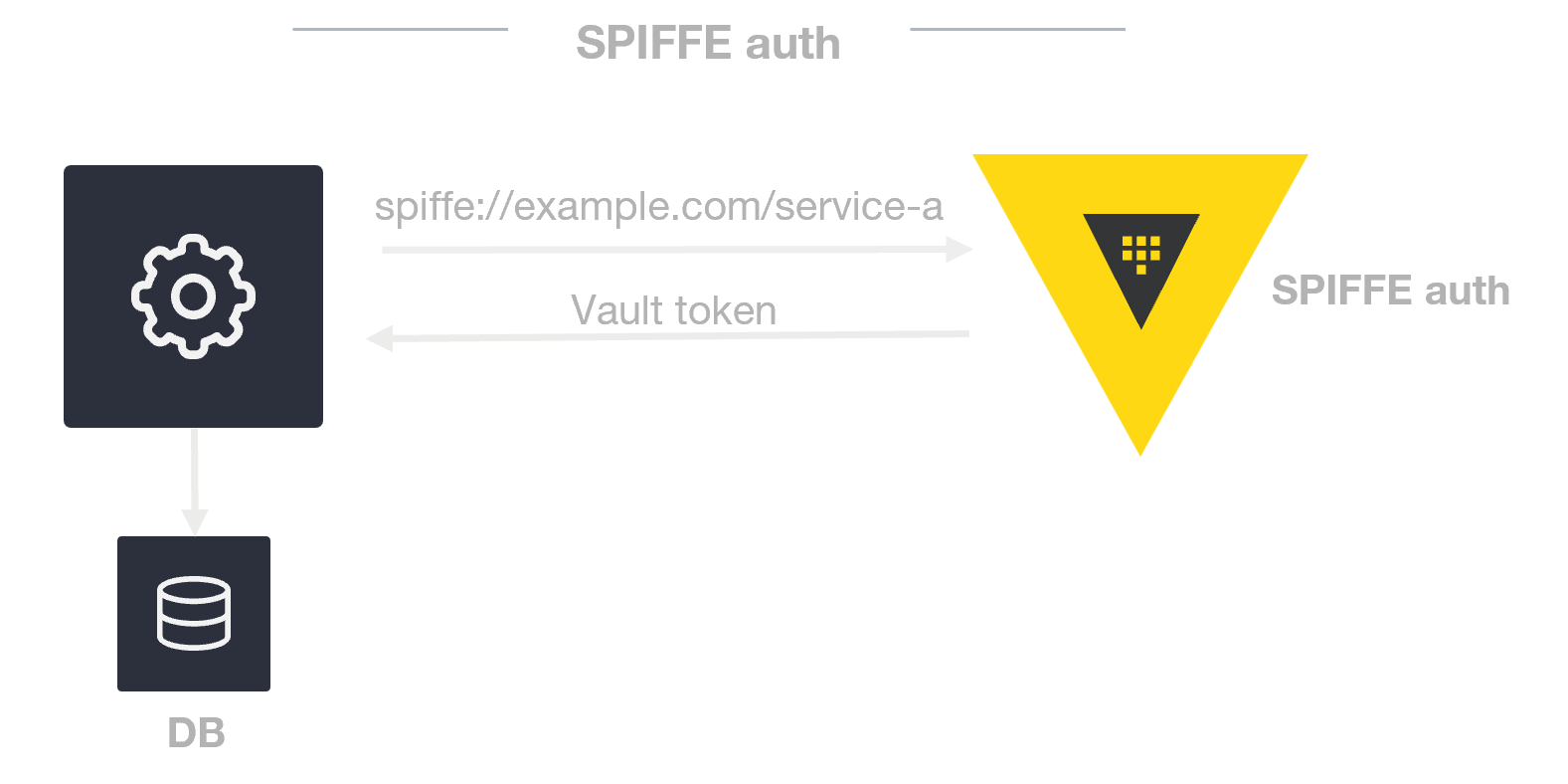
SPIFFE stands for Secure Production Identity Framework For Everyone. At its core, it is an open standard that defines how to issue and validate cryptographically secure identities for workloads—services, processes, or AI agents—without relying on long-lived secrets like passwords or API keys. Each entity gets a unique SPIFFE ID, which is a URI that encodes its identity. This ID is bound to the workload itself, not to a human user, making it ideal for automated systems. The framework relies on a built-in mechanism for certificate issuance and rotation, typically through the SPIRE (SPIFFE Runtime Environment) project. By automating credential management, SPIFFE reduces the risk of secret leaks and ensures that every interaction can be authenticated via mutual TLS (mTLS). In short, SPIFFE provides a dynamic, federated identity layer that works across organizations and environments, enabling secure communication in cloud-native and AI-driven ecosystems.
Why Is SPIFFE Particularly Important for Agentic AI Systems?
Agentic AI systems—such as autonomous agents, LLM-powered bots, or robotic fleets—operate independently, make decisions in real time, and frequently interact with other agents or services. Unlike traditional software, these systems need to constantly prove their identity and authority in multi-agent environments. SPIFFE is a natural fit because it was designed for exactly this kind of distributed, ephemeral, and non-human identity management. The framework enables verifiable non-human identity: each AI agent can be assigned a unique SPIFFE ID that attests to its origin, capabilities, and trust level. This is critical for preventing impersonation and ensuring that only authorized agents can access sensitive data or perform specific actions. Moreover, SPIFFE supports a zero-trust model where every interaction is authenticated and encrypted, minimizing the attack surface. With agentic AI systems often spanning multiple clouds and organizations, SPIFFE’s federation model allows identities to be validated across different trust domains, enabling secure collaboration at scale.
How Does SPIFFE Provide Verifiable Non-Human Identity for AI Agents?
Traditional identity methods, like usernames and passwords, are fundamentally human-centric and ill-suited for automated entities. SPIFFE overcomes this by tying identity directly to the workload rather than a person. When an AI agent is launched, it receives a cryptographically signed document—typically an X.509 certificate—containing its SPIFFE ID. This ID can include metadata about the agent, such as its origin, role, or trust level. Because the identity is issued and managed by a central authority (like SPIRE), it can be dynamically rotated and revoked. For example, if an autonomous drone or a trading bot is compromised, its SPIFFE ID can be immediately invalidated, preventing further malicious actions. The identity is also machine-verifiable: other agents or services can validate the certificate without needing a human-in-the-loop. This creates a strong, non-repudiable link between the agent and its identity, which is essential for auditing and compliance in autonomous systems.
How Does SPIFFE Support Zero-Trust Architecture for AI Ecosystems?
In a zero-trust model, no entity—whether human or machine—is trusted by default. SPIFFE directly enables this by facilitating mutual TLS (mTLS) between agents and services. Instead of relying on network perimeter defenses, every communication between AI agents is encrypted and authenticated using the caller's SPIFFE ID. This means that even if an attacker gains access to the network, they cannot impersonate an agent without possessing the correct private key and valid certificate. SPIFFE also supports fine-grained access control: administrators can define policies that allow only agents with specific SPIFFE IDs to perform certain operations. For instance, in a smart city deployment, only the traffic management agent might be allowed to change signal timings, while the emergency response agent has a different set of permissions. By integrating SPIFFE with a zero-trust framework, organizations can build resilient AI systems that resist impersonation, privilege escalation, and lateral movement by malicious actors.
How Does SPIFFE Handle Federation Across Different Trust Domains?
Agentic AI systems rarely operate within a single organization or cloud environment. They often need to collaborate with agents from different vendors, government agencies, or geographic regions. SPIFFE’s federation model solves this by allowing multiple trust domains—each with its own identity authority—to mutually recognize and validate each other's SPIFFE IDs. This is achieved through a set of standardized mechanisms, such as federated bundle exchange, where trust anchors are shared securely. For example, a logistics AI agent from a shipping company can authenticate itself to a customs AI agent from a government system, even though they belong to different administrative domains. The SPIFFE ID itself carry information about the origin of the agent, enabling the receiving system to apply domain-specific policies. This federation capability is vital for building secure, interoperable multi-agent systems that span clouds, on-premises data centers, and partner networks, all while maintaining cryptographic assurance of identity.
How Does SPIFFE Manage the Dynamic Identity Lifecycle of Ephemeral AI Agents?
Many AI workloads are ephemeral—they are spun up for a specific task, run for minutes or hours, and then decommissioned. Managing static credentials for such short-lived entities is impractical and risky. SPIFFE addresses this with automatic identity issuance and rotation. When an agent is created, the SPIFFE system (typically via SPIRE) dynamically issues a certificate with a short time-to-live (TTL). This certificate is automatically renewed or replaced throughout the agent's lifetime. If the agent is terminated, the credential is implicitly revoked when it expires, leaving no stale secrets behind. Additionally, SPIFFE supports explicit revocation when needed—for instance, if an agent is compromised. This dynamic lifecycle reduces the attack surface because there are no long-lived secrets that can be exfiltrated and reused. For agentic AI systems that operate at scale, this automated credential management is a game-changer, allowing them to maintain security without manual intervention.
What Does a Real-World Use Case for SPIFFE with AI Agents Look Like?
Consider a smart city deployment where a swarm of AI agents manages traffic lights, energy grids, and emergency response coordination. Each agent—traffic controller, power optimizer, 911 dispatcher—needs to prove its identity and authority to other agents. Without SPIFFE, an attacker could impersonate an emergency response agent and send false alerts. With SPIFFE, every agent is issued a unique SPIFFE ID that encodes its role and authority. When the traffic agent needs to request a green wave for an ambulance, it first authenticates itself using mTLS, establishing trust. The ambulance agent’s ID proves it has the right to request priority routing. Additionally, because the system spans multiple city departments and possibly third-party vendors, SPIFFE’s federation ensures that the police department’s trust domain can validate IDs from the transportation department’s domain. All communications are encrypted, and credentials are automatically rotated, so even if an agent is compromised, the damage is contained. This use case illustrates how SPIFFE provides the foundational security layer for complex, multi-agent AI systems.