5 Key Takeaways from the Genesis Mission: Where AI Meets Energy to Power America's Future
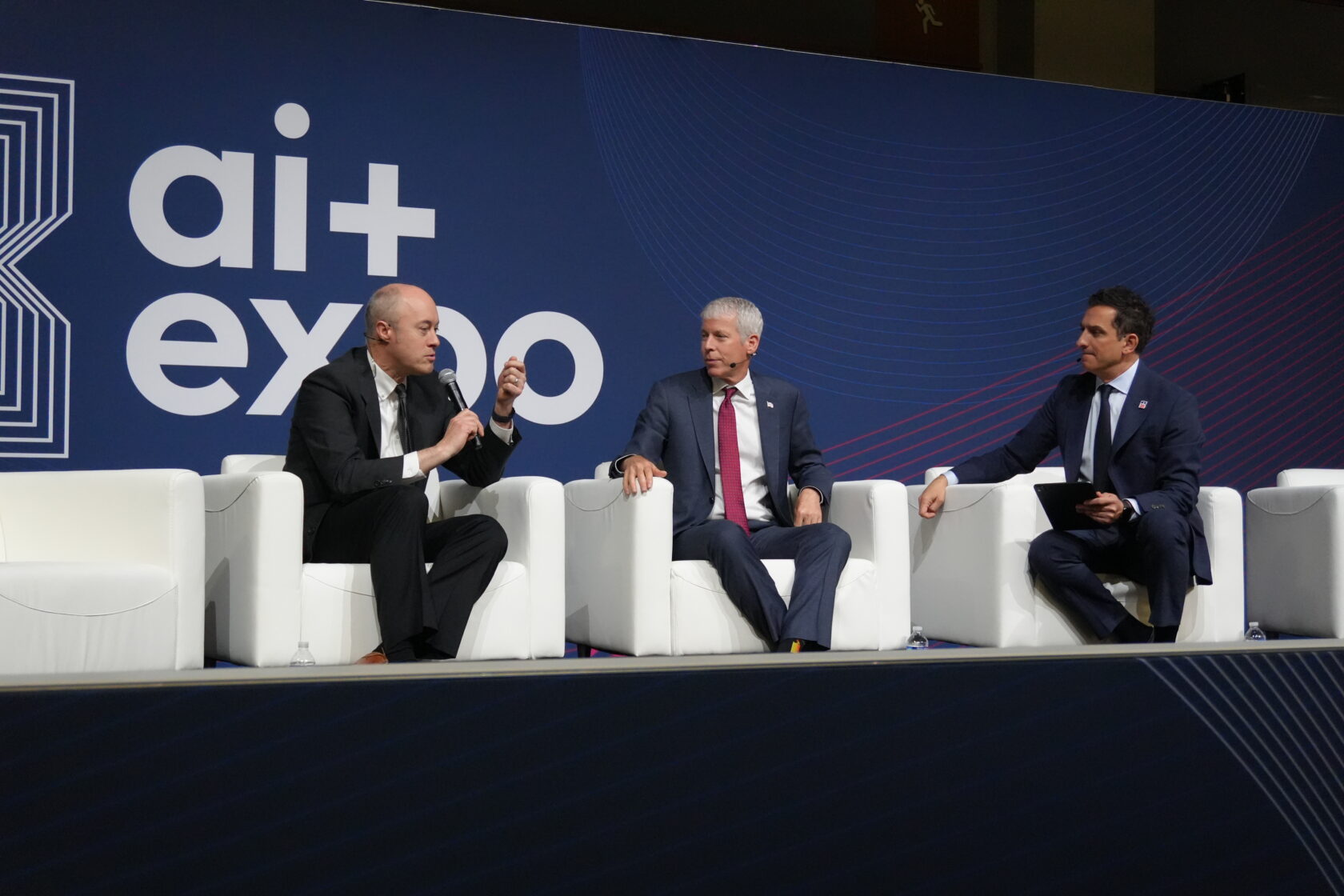
The relationship between artificial intelligence and energy isn't just about feeding data centers—it's about building a future where American innovation leads the world. That was the central theme of a compelling fireside chat between U.S. Energy Secretary Chris Wright and NVIDIA Vice President Ian Buck at the SCSP AI+ Expo. In a conversation titled 'Powering the Next American Century,' they outlined a bold vision where AI doesn't just consume energy but actively helps generate and manage it more efficiently. The Genesis Mission, a Department of Energy initiative to harness AI for scientific discovery, stands at the heart of this vision. Here are the five crucial insights from their discussion that explain how we're powering the next American century.
1. Energy Is the Foundation of Human Opportunity
Secretary Wright didn't mince words: 'Energy is life.' He argued that a society's prosperity is directly tied to the abundance and affordability of its energy. More energy means more opportunities—for education, healthcare, industry, and innovation. This isn't just about powering gadgets; it's about creating a fundamentally richer human experience. When energy is cheap and plentiful, it lifts entire populations, enabling them to pursue higher goals. AI, in turn, becomes a force multiplier in this equation. By optimizing grid operations, discovering new materials, and even designing better solar panels, AI can unlock new energy sources and make existing ones far more efficient. The message is clear: American leadership in AI depends on American leadership in energy, and the two are now inseparable.
2. The Genesis Mission: Where AI Meets Scientific Breakthroughs
The Genesis Mission is the U.S. Department of Energy's flagship program to apply AI to grand scientific challenges. From nuclear fusion to battery storage, AI accelerates the pace of discovery by sifting through mountains of data and simulating complex phenomena. Ian Buck noted that NVIDIA has been building supercomputers with the national labs for two decades, and the Genesis Mission represents the culmination of that partnership. 'I've never seen more excitement across the lab and industry,' Buck said, emphasizing that NVIDIA is '100% committed and invested' in the mission. This isn't just a theoretical exercise; it's a concrete effort to use the same AI tools driving commercial innovation to solve humanity's toughest energy problems. The mission brings together the best minds from DOE's 17 national labs, along with industry partners, to create a shared AI platform for science.
3. A Full-Stack Partnership: DOE and NVIDIA
The collaboration between the Department of Energy and NVIDIA goes far beyond hardware. As Buck explained, NVIDIA brings the 'full stack'—not just chips, but algorithms, methods, and two decades of hands-on experience working with the labs. The DOE contributes its world-class scientists, national-scale problems, and vast datasets. This synergy means that the AI supercomputers being built are not generic data center machines; they are finely tuned instruments for scientific discovery. The partnership ensures that the same technologies powering consumer AI—like large language models—are adapted for physics simulations, climate modeling, and materials science. This approach democratizes access: the same building blocks used by major AI labs are now available to researchers across the globe, accelerating innovation in energy and beyond.
4. Equinox and Solstice: Supercomputers That Redefine Scale
Two massive AI supercomputers are rising at Argonne National Laboratory. Equinox, currently being deployed, features 10,000 NVIDIA Grace Blackwell GPUs. Buck highlighted that these are 'the same GPU, the same software being used to train and build AI that we’re all enjoying today.' But the real marvel is Solstice, which will use 100,000 next-generation Vera Rubin GPUs. To put that in perspective, Solstice will deliver 5,000 exaflops of performance—that's five times more computing power than the entire TOP500 supercomputer list combined. These machines are dedicated to science, not commercial workloads. They represent a massive national investment in AI-driven energy research, enabling simulations that were previously impossible. The scale is staggering, but the goal is simple: push the boundaries of what AI can do for energy and science.
5. Open-Source AI for the Scientific Community
One of the most exciting developments from the Genesis Mission is an open-source NVIDIA AI model trained on 1.5 million physics papers and fine-tuned on 100,000 specifically curated works. This model is designed to understand and generate scientific insights, making advanced AI accessible to any researcher—not just those with deep pockets. By sharing these tools, the DOE and NVIDIA are fostering a collaborative scientific ecosystem. The model can help identify promising materials for batteries, optimize fusion reactor designs, or even predict climate patterns with greater accuracy. This open approach ensures that the benefits of AI-driven energy research are widely distributed, accelerating the pace of discovery across disciplines. It's a glimpse of how democratized AI can help solve our biggest energy challenges.
Conclusion: The Road Ahead
The vision laid out by Secretary Wright and Ian Buck is one of symbiotic progress: AI needs energy to grow, and energy needs AI to become cleaner, cheaper, and more abundant. The Genesis Mission is not just a government program; it's a blueprint for how public-private partnerships can drive technological leadership. As America navigates the 21st century, the integration of AI and energy will be a defining factor. The supercomputers Equinox and Solstice are physical manifestations of this commitment, while the open-source AI model points to a future where science is more collaborative and efficient. The message from the SCSP AI+ Expo is clear: by investing in both AI and energy infrastructure, the United States can power not just its own next century, but a global renaissance of innovation and opportunity.