10 Key Insights Into Australia’s Home Battery Boom: Surpassing 400,000 Installations
Australia has reached a landmark moment in its clean energy journey. Home battery installations have surged past the 400,000 mark, a feat that Energy Minister Chris Bowen has called a “remarkable milestone.” This growth continues even amid changes to solar rebate schemes, with the combined storage capacity of these residential systems now matching what was added from grid-scale batteries over the past year. Here are 10 essential facts you need to know about this accelerating trend.
1. The Significant 400,000 Milestone
The number of home battery systems installed across Australia has officially crossed 400,000 units. This figure represents a doubling of the market in just a few years, driven by rising electricity prices, improving battery technology, and a desire for energy independence. Minister Bowen highlighted that this achievement underscores the rapid adoption of household storage, which is reshaping the nation’s energy landscape. Each system contributes to a more decentralised and resilient grid.
2. Sustained Growth Despite Rebate Changes
Many expected the shift in solar rebate policies to slow down battery uptake, yet installations continue to climb. State-level incentive adjustments and the phase-out of certain feed-in tariffs have not dampened consumer appetite. Instead, households are increasingly viewing batteries as a long-term investment that shields them from volatile energy costs. The resilience of this market signals that battery storage is now a mainstream choice, not just a niche for early adopters.
3. Matching Grid-Scale Battery Capacity
A striking comparison: the collective storage capacity of all those home batteries now equals the new capacity added by large-scale grid batteries over the last 12 months. This parity highlights the powerful role that distributed residential storage plays in balancing supply and demand. As more homes store solar power during the day and discharge it in the evening, the cumulative effect significantly reduces stress on the central grid, especially during peak hours.
4. Impact on Electricity Grid Stability
With 400,000 small-scale batteries acting as a virtual power plant, grid operators gain new flexibility. These systems can absorb excess solar generation in the middle of the day and release it when the sun goes down. This helps avoid the “solar duck curve” problem and lessens the need for fossil fuel peaking plants. The aggregation of household batteries is quickly becoming a critical tool for maintaining a stable, clean electricity network.
5. Minister Bowen’s Reaction and Government Support
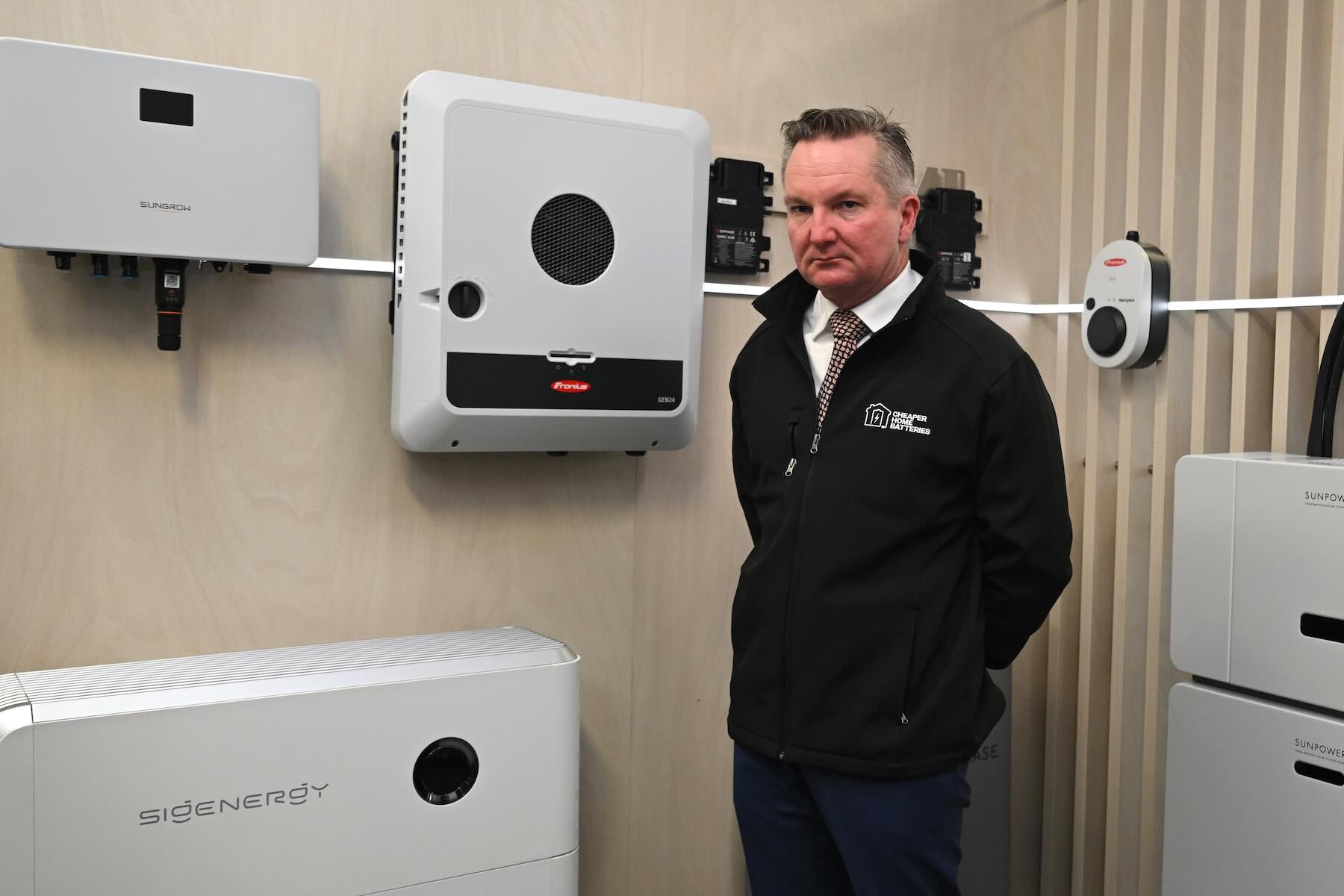
Energy Minister Chris Bowen praised the milestone, noting it reflects strong consumer confidence in renewable storage. The government has backed this trend through initiatives like the Home Battery Storage Program and broader climate policies. Bowen emphasised that reaching 400,000 installations is not just a number—it demonstrates that households are active participants in the energy transition, taking control of their power usage and costs.
6. Driving Down Household Energy Bills
One major motivator for installing a home battery is financial savings. By storing free solar electricity instead of exporting it for a low feed-in tariff, households can cut their grid consumption by up to 80-90%. With battery prices having dropped more than 50% over the past five years, the payback period is now under seven years for many homes. Combined with time-of-use tariffs, batteries allow families to shift usage to cheap off-peak periods.
7. Growing Market Competition and Technology Advances
The surge in installations has attracted manufacturers like Tesla, LG, SolarEdge, and local brands such as Sonnen and Redback. Competition has spurred innovation, leading to batteries with longer warranties (10 years or more), higher usable capacities, and better software integration with home energy management systems. Lithium iron phosphate (LFP) chemistry is becoming standard, offering improved safety and longevity. The average system size has grown to around 10-13 kWh.
8. Regional Variations and State Leadership
South Australia leads per capita, with roughly one in three solar homes now paired with a battery. New South Wales, Victoria, and Queensland follow, driven by generous state-based rebates and virtual power plant programs. In Western Australia and the Northern Territory, off-grid and fringe-of-grid homes also contribute significantly. These regional policies have created a patchwork of incentives, but the overall trend is upward everywhere.
9. Future Projections and the Road to 1 Million
Industry analysts predict that Australia will hit 1 million home batteries by 2030, if not sooner. Declining costs, electric vehicle adoption with V2G capabilities, and stricter grid connection rules for solar-only systems will accelerate uptake. The current record year (2023-24) is likely to be broken again. As battery storage becomes a standard part of new builds and retrofits, the 400,000 mark may be remembered as a tipping point.
10. Environmental and Societal Benefits
Beyond individual savings, home batteries reduce emissions by enabling higher renewable penetration. Each typical 10 kWh battery can displace around 1.5 tonnes of CO₂ per year when paired with rooftop solar. The cumulative impact of 400,000 systems is equivalent to taking hundreds of thousands of cars off the road. This decentralised storage also enhances energy democracy, giving communities’ power over their energy future and reducing vulnerability to blackouts.
Australia’s home battery surge is a clear signal that energy self-sufficiency is no longer a futuristic concept. With 400,000 systems already in place and growth accelerating, the transformation of the electricity grid is well underway. Whether you’re a homeowner considering a battery or an observer of the clean energy transition, these ten facts highlight why this milestone is truly remarkable—and just the beginning.