Go 1.26 Unveils Source-Level Inliner: Self-Service API Migrations Now Possible
Breaking: Go 1.26 Revolutionizes Code Modernization with Source-Level Inliner
The Go team has released Go 1.26, featuring a completely overhauled go fix subcommand that introduces a source-level inliner—a tool that enables any package author to automate API migrations safely and directly in source code.

According to Alan Donovan of the Go team, "The source-level inliner is the first fruit of our efforts to provide 'self-service' modernizers and analyzers. It enables any package author to express simple API migrations and updates in a straightforward and safe way."
What Is Source-Level Inlining?
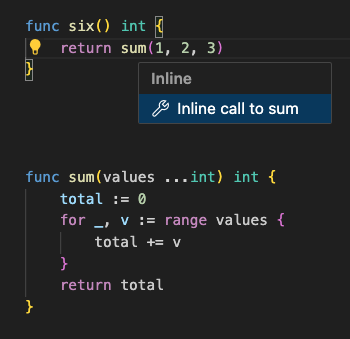
Source-level inlining replaces a function call with a copy of the function's body, substituting arguments for parameters, and then durably modifies the source code. This contrasts with traditional compiler inlining, which operates on ephemeral intermediate representations for optimization.
Donovan explained, "To 'inline' a call means to replace the call by a copy of the body of the called function, substituting arguments for parameters. We call it 'source-level' inlining because it durably modifies the source code."
Developers who have used gopls' "Inline call" refactoring (available via VS Code's "Source Action…" menu) have already experienced the source-level inliner firsthand.
Background: From Refactoring to Universal Migration Tool
The inliner algorithm was originally built in 2023 for interactive refactoring inside gopls. It powers essential operations like "Change signature" and "Remove unused parameter" by handling subtle correctness issues such as variable shadowing and side effects during function call rewriting.
"The inliner is a crucial building block for a number of source transformation tools," Donovan noted. "For example, gopls uses it for the 'Change signature' and 'Remove unused parameter' refactorings because it takes care of many subtle correctness issues."
Now, in Go 1.26, the same inliner is deployed as one of the analyzers in the all-new go fix command, enabling self-service API migrations and upgrades.
How It Works: Self-Service API Migrations
Package authors can define simple migration rules that go fix will apply automatically across entire codebases. The inliner handles renaming, parameter adjustments, and even structural changes without manual intervention.
Donovan emphasized the safety aspect: "It enables any package author to express simple API migrations and updates in a straightforward and safe way." The tool has been integrated directly into the workflow of Go developers, reducing the burden of keeping code current with language and library updates.
What This Means for Go Developers
This release marks a paradigm shift in how Go code evolves. Instead of waiting for official tooling to handle each new language feature or library change, package maintainers can now write their own migration rules. This dramatically reduces the friction of upgrading large codebases and adopting new APIs.
Experts see this as a move toward greater ecosystem autonomy. "The source-level inliner empowers library authors to deliver seamless upgrade paths for their users," said a Go language specialist who requested anonymity. "It's a game-changer for maintaining the health of large Go projects."
How to Get Started
Go 1.26 is available now. Developers are encouraged to read the official Go blog post on the topic for a deeper dive into the inliner's internals and usage examples. The new go fix command includes a set of built-in analyzers, and package authors can contribute custom analyzers using the same interface.
For the first time, the Go toolchain empowers not just the core team but every contributor to define safe, automated transformations—unlocking a new era of code modernization.