Kubernetes v1.36: Soaring into Clear Skies – The Spring Release Delivers 70 Enhancements
Introduction
Kubernetes v1.36, code-named ハル (Haru), marks the first release of 2026 and arrives as the season shifts from winter to spring. This release, like its predecessors, embodies the community's commitment to iterative improvement and stability. With 70 enhancements spread across stable, beta, and alpha stages, v1.36 offers a broad set of new capabilities designed to improve scalability, security, and operational efficiency. The theme of renewal and clear skies runs throughout the release, reflected in both its features and its artistic direction.
Release Overview: 70 Enhancements
Of the 70 enhancements in Kubernetes v1.36, 18 have graduated to Stable, 25 are entering Beta, and 25 are debuting in Alpha. This balanced distribution ensures that production workloads benefit from mature, hardened features while the community continues to explore new ideas. The release also includes several deprecations and removals; administrators and developers should review those changes carefully.
Stable Enhancements
The 18 stable features cover a range of functional areas, from improved scheduling and resource management to enhanced network policies and storage integration. These features have undergone extensive testing and are now recommended for production use. Users should consult the official Kubernetes changelog for the full list of stable graduations.
Beta Enhancements
The 25 beta features offer a mix of new functionality and performance improvements. While still undergoing final validation, these are considered safe for non‑critical environments. Highlights include updates to the Container Runtime Interface and Node Problem Detector integration.
Alpha Enhancements
Twenty‑five alpha features are introduced in v1.36. These are experimental and disabled by default but provide a window into upcoming capabilities. Developers and operators are encouraged to test these features in sandbox clusters and provide feedback to the relevant SIGs.
Theme and Logo: ハル (Haru)
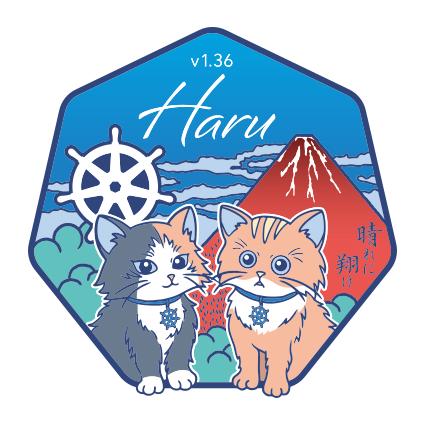
The release theme draws inspiration from the Japanese word haru, which can mean spring (春), clear skies (晴れ), or a distant horizon (遥か). The logo, created by avocadoneko / Natsuho Ide, reimagines Fine Wind, Clear Morning (also known as Red Fuji) from Katsushika Hokusai's series Thirty‑six Views of Mount Fuji. The three‑colour palette – red mountain, blue sky, and white clouds – evokes the transition from winter to spring.
At the foot of Mount Fuji sit two cats, Stella (left) and Nacho (right), wearing the Kubernetes helm. They serve as komainu – guardian lion‑dogs – representing the many hands that support each release: SIGs, working groups, maintainers, reviewers, documentation writers, translators, and first‑time contributors. The calligraphy 晴れに翔け (hare ni kake) reads “soar into clear skies”, and the full couplet – hare ni kake, asu yo ake – urges the community to “soar into clear skies; toward tomorrow's sunrise.” This message of renewal and forward momentum underpins the entire release.
Deprecations and Removals
Kubernetes v1.36 removes several older features and deprecates others. Notable deprecations affect some legacy API versions and deprecated flags. Cluster operators should review the full list in the official release notes to plan migration paths. The SIGs have provided clear documentation and tooling to ease transitions.
Conclusion
Kubernetes v1.36 – ハル – is a release that celebrates both tradition and innovation. The 70 enhancements demonstrate the project's continued growth, while the artistic theme reminds us that every release is part of a longer journey. As the Kubernetes community soars into clear skies, v1.36 lays a solid foundation for the features and horizons yet to come.
For more details, see the official release notes and the blog post from the release team. To explore the logo in its full context, visit the Kubernetes GitHub repository.