10 Things You Need to Know About Google's Agentic Revolution: Antigravity 2.0 and AI Studio Android App
1. The Rise of Gemini 3.5 Flash: Frontier-Level Performance at a Fraction of the Cost
Google's Gemini 3.5 Flash marks a significant leap in AI efficiency. It delivers performance that rivals top-tier models while drastically reducing computational expenses. This cost-effectiveness allows developers and enterprises to deploy advanced AI agents without breaking budgets. By optimizing inference speed and resource usage, Gemini 3.5 Flash makes frontier-level capabilities accessible for a wide range of applications, from real-time data analysis to complex decision-making. This efficiency is the backbone of Google's new agentic tools, enabling them to run sophisticated agents at scale. The model's ability to handle multiple tasks simultaneously further enhances its utility in dynamic environments. As a result, you can now build and deploy agents that were previously too expensive or slow to consider.
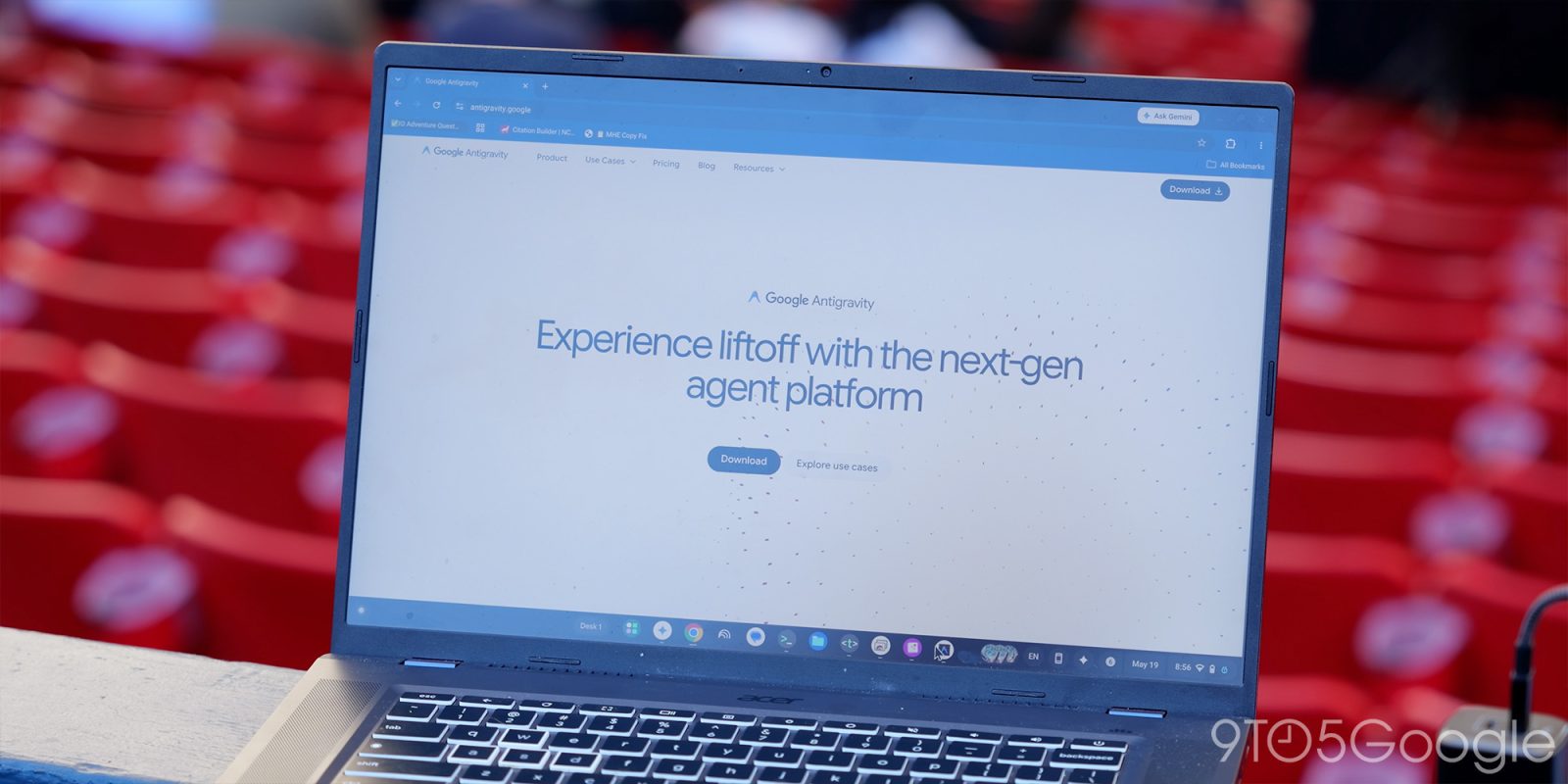
2. Antigravity 2.0: A Complete Agentic Development Suite
Antigravity 2.0 is Google's comprehensive platform for building, managing, and deploying AI agents. It streamlines the entire agent lifecycle, from prototyping to production. Developers can create agents that autonomously perform tasks, interact with APIs, and adapt to new information. The suite includes a visual workflow editor, debugging tools, and pre-built agent templates. This lowers the barrier to entry for teams without deep AI expertise. With Antigravity 2.0, you can orchestrate multi-agent systems, where agents collaborate to solve complex problems. The platform also handles agent memory, context management, and error recovery, making your agents more reliable. Google's goal is to turn agents into first-class citizens of your development ecosystem, and Antigravity 2.0 delivers on that vision.
3. Zero-Code Agent Creation with Drag-and-Drop Simplicity
One of Antigravity 2.0's standout features is its zero-code agent builder. Using a visual drag-and-drop interface, you can define agent behaviors, triggers, and actions without writing a single line of code. This dramatically speeds up development and empowers non-technical team members to contribute. For example, you can create a customer support agent that accesses a knowledge base and escalates complex issues—all by connecting blocks on a canvas. The builder supports conditional logic, loops, and data transformations. Once built, agents can be tested in a sandbox environment before deployment. This approach democratizes agent creation, allowing businesses to prototype and iterate rapidly. It's a game-changer for agile teams looking to automate workflows without heavy engineering overhead.
4. Robust Agent Management: Monitoring, Logging, and Scaling
Antigravity 2.0 doesn't just help you build agents—it also provides enterprise-grade management tools. You can monitor agent performance in real-time, view detailed logs, and set up alerts for anomalies. The platform automatically scales agents based on demand, ensuring consistent response times under load. Each agent's behavior can be versioned, allowing you to roll back to a previous stable version if needed. Additionally, you can define resource quotas to prevent runaway costs. The management dashboard gives you a bird's-eye view of all your agents, their status, and key metrics like success rates and latency. This operational control ensures that your agent ecosystem remains healthy and efficient, even as you scale from a few agents to thousands.
5. Seamless Integration with Existing Google Cloud Services
Antigravity 2.0 is deeply integrated with Google Cloud, allowing you to connect agents to Cloud Storage, BigQuery, Pub/Sub, and Vertex AI Pipelines. This means your agents can access corporate data, trigger data processing jobs, and feed results into other systems. For instance, an agent can pull customer data from BigQuery, analyze it with Gemini 3.5 Flash, and then update a dashboard—all within a single workflow. The integration also extends to Google Workspace, so agents can send emails, update Sheets, or create Docs. This unified environment reduces integration friction and speeds up time to value. If you already use Google Cloud, Antigravity 2.0 feels like a natural extension, not a separate tool.
6. AI Studio Android App: Take Your Ideas Anywhere
Alongside Antigravity 2.0, Google launched a dedicated AI Studio Android app. This mobile application lets you interact with AI Studio's capabilities on the go. You can prompt models, fine-tune responses, and even prototype small agents directly from your phone. The app supports voice input, making it convenient to capture ideas while commuting or walking. It syncs seamlessly with the web version, so everything you start on mobile can be finished on desktop. The app is optimized for touch interfaces, with a clean design that highlights the most common tasks. For developers who need to test a quick hypothesis or iterate on a prompt during a meeting, this app is invaluable. It extends the AI Studio experience beyond the office, ensuring creativity never hits a pause.
7. Contextual Memory: Smarter Agents That Learn from History
Antigravity 2.0 introduces advanced contextual memory for agents. Each agent can maintain short-term and long-term memory, storing key information from previous interactions. This enables agents to personalize responses, recall user preferences, and avoid redundant questions. For example, a virtual assistant can remember that a user prefers concise answers, and adjust its style accordingly. The memory is encrypted and can be reset with simple commands. Developers can also define memory retention policies to comply with data privacy regulations. This feature transforms agents from stateless functions into intelligent assistants that build relationships over time. It's a critical step toward human-like interaction in automated systems.

8. Safety and Guardrails Built into the Platform
Google has baked safety features directly into Antigravity 2.0. You can set guardrails to prevent agents from taking harmful or unintended actions. For instance, you can restrict agent access to certain APIs, limit the number of autonomous steps, or require human approval for sensitive operations. The platform includes toxicity filters and output validation to ensure agent responses are appropriate. All agent activity is logged and auditable, providing transparency for compliance teams. These safety mechanisms give developers confidence to deploy agents in customer-facing roles. Google's responsible AI principles are embedded, not bolted on, so you can build with trust from the start.
9. Community Templates and Marketplace
To accelerate adoption, Antigravity 2.0 includes a marketplace of agent templates. You can browse pre-built agents for common tasks like data extraction, content generation, and customer support. These templates are created by both Google and the community, and they're fully customizable. If you need an agent that summarizes emails and drafts replies, there's likely a template for that. You can also share your own agents with the community, fostering collaboration. The marketplace also offers plug-ins for popular third-party services (Slack, Jira, Salesforce). This ecosystem reduces the need to start from scratch, letting you focus on customization rather than reinventing the wheel.
10. Future-Proofing: What's Next for Google's Agentic Strategy
Google is positioning Antigravity 2.0 and AI Studio as foundational pillars for the future of AI development. With the continued evolution of Gemini models (including multimodal capabilities), agents will soon be able to process images, audio, and video in real-time. The roadmap includes better collaborative agents that can work alongside humans in shared spaces. Additionally, Google is exploring on-device agent execution using the new Android app, reducing latency and improving privacy. As AI becomes more ubiquitous, having a robust agentic platform will be essential. Google's investment in cost-efficient models and mobile access ensures that both enterprises and individuals can participate in this revolution. The next wave will likely include agent-to-agent communication protocols, making multi-agent systems even more powerful.
Conclusion: Google's launch of Antigravity 2.0 and the AI Studio Android app marks a pivotal moment in the democratization of AI agents. By pairing Gemini 3.5 Flash's cost efficiency with a powerful development suite and mobile accessibility, Google is enabling anyone to build, manage, and deploy intelligent agents at scale. Whether you're a seasoned developer or a business analyst, these tools remove traditional barriers. The focus on safety, integration, and community ensures that the ecosystem will continue to grow. As AI agents become a staple of modern workflows, staying ahead of these developments is crucial. Explore Antigravity 2.0 and start building your first agent today—the future of automation is here.